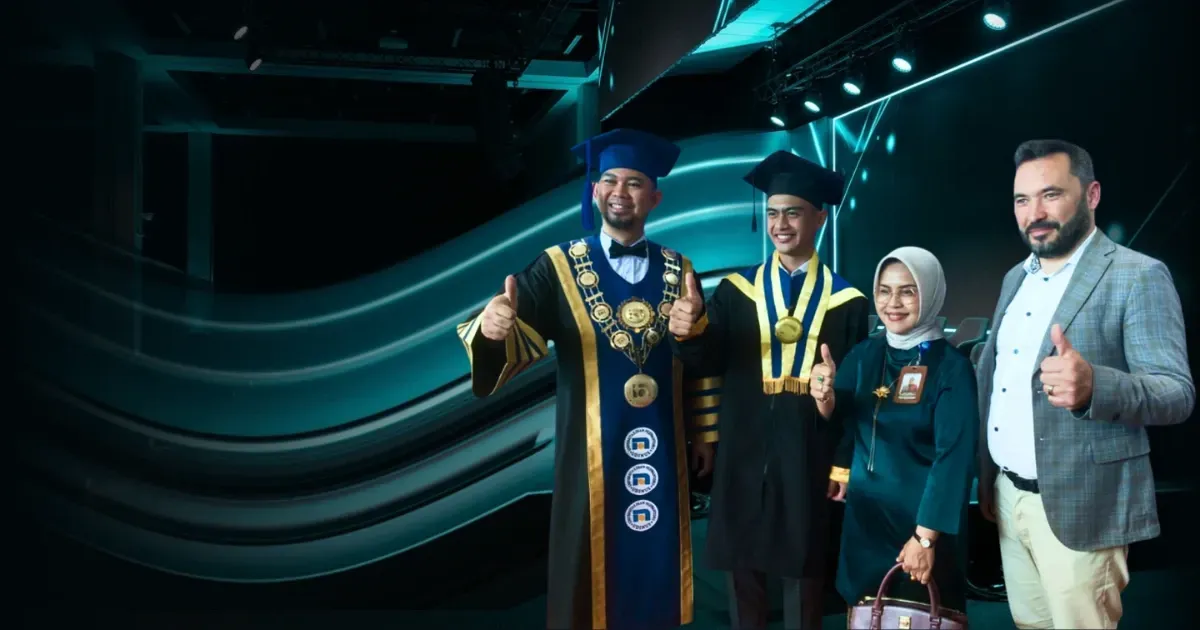
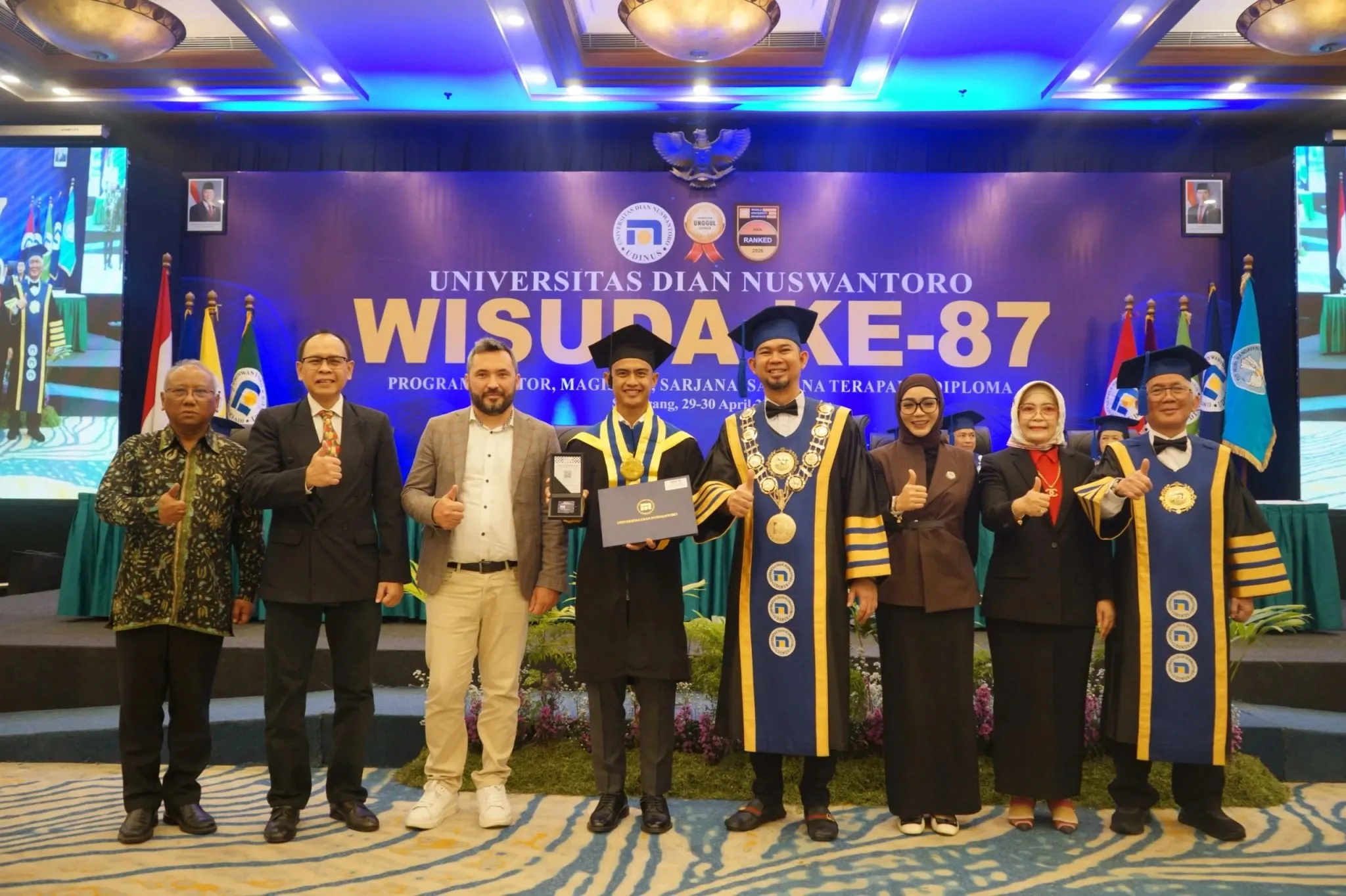
The Rama Shinta Ballroom at the Patra Hotel was full on April 29. 841 graduates, academic robes, a stage. And on it — something that hadn't happened before in Indonesia: diplomas being handed over that nobody could fake, and anyone in the world could verify in seconds. Universitas Dian Nuswantoro had decided that a piece of paper wasn't enough anymore.
The company behind it is Sealbound — a portfolio company of Top Netics.
The Problem With Diplomas That Cross Borders
Diploma fraud is not a fringe issue. Fake degrees, forged transcripts, and edited PDFs circulate at a scale large enough that entire verification industries exist just to catch them — and even then, catching them takes time. More than two billion certificates and diplomas are issued worldwide every year, and the overwhelming majority are still paper or PDF: formats that are easy to alter and slow to confirm.
The real friction shows up the moment a credential needs to travel. A graduate applying for a job in Dubai or Berlin can't simply hand over a Udinus diploma and expect it to be accepted on sight. It typically needs notarization, certified translation, sometimes apostille certification — a process that can take weeks and cost real money, for a piece of paper that's still, fundamentally, just a claim. Employers and universities abroad have no fast way to confirm a tamper-proof digital diploma exists, because until recently, it usually didn't.
A blockchain-verified diploma works differently. The verification doesn't depend on where you are, who you call, or how long you're willing to wait — it depends on a hash that either matches or doesn't. This is, at its core, what blockchain diploma verification is meant to replace: a chain of trust built on phone calls and paperwork, with a chain of trust built on math.
Blockchain Diploma vs Paper Diploma: What Actually Changes
The difference isn't just format. A paper diploma or PDF exists as a static document — the only way to confirm it's real is to contact the issuing institution, wait for a response, and trust the process. For a domestic employer, that friction is annoying. For an employer in another country, it's often enough to make verification simply not happen.
A blockchain verified diploma works the other way around. The credential itself carries the proof — a cryptographic fingerprint anchored on-chain at the moment of issuance. Nobody needs to call Udinus to confirm a graduate's degree. The document either matches the on-chain record or it doesn't, and that check takes seconds regardless of where it's being done.
This is why Indonesia blockchain education institutions are increasingly looking at this infrastructure: for a university registrar, every diploma issued on Sealbound is permanently verifiable without your office being in the loop — whether a graduate finished last month or five years ago.
How Sealbound's Blockchain Diploma Verification Works
Sealbound is what's called a phygital credential platform — a system where every digital certificate has a physical-world counterpart it stays permanently linked to, whether that's a printed diploma, an ID card, or a ceremony handover. The "phygital" part is the point: nothing about the process feels purely digital or abstract to the person receiving it.
What the university does
The registrar's team uploads graduate data — name, programme, date, honours — into the Sealbound platform. Credentials are designed under the university's own brand: its domain, its logo, its design system. Udinus graduates received credentials that looked and felt like a Udinus document, with no Sealbound branding visible to the recipient.
Sealbound then anchors a cryptographic hash of each credential on the blockchain. This hash is a unique digital fingerprint — if a single character in the document changes, the hash changes, and the verification fails. The original record is now permanent and tamper-evident without any ongoing action from the university.
Credentials are issued in bulk and delivered to graduates via email. The entire issuance process — from upload to delivery — takes minutes, not days. For Udinus, every blockchain certificate for universities in this batch — 841 in total — was issued across two ceremony days without a single manual verification step.
What the graduate receives
Each graduate gets a credential they actually control: stored in a digital wallet, shareable to LinkedIn with one click, and — for those who want a physical touchpoint — available as an NFC-enabled card linking straight back to the on-chain record. This is what verifiable digital credentials look like in practice: the diploma a Udinus graduate holds at the ceremony is the same one permanently verifiable online, with no separate "real" and "digital" version to reconcile later.
How an employer or institution verifies it
Verification doesn't require an account, a login, or a phone call to the registrar's office. Anyone — an HR team in Berlin, an immigration officer in Dubai, a graduate school in Jakarta — scans the QR code on the credential, and Sealbound checks the document's hash against the one anchored on-chain. A match confirms the diploma is authentic and unaltered, in seconds, from anywhere with an internet connection. This is what blockchain diploma verification is supposed to deliver, and it's the answer to the question every cross-border applicant eventually runs into: yes, a Udinus diploma issued in Semarang can be verified the same way in Dubai or Berlin, with no notarization and no waiting.
What Udinus's Decision Means for Universities Evaluating Blockchain Credentials
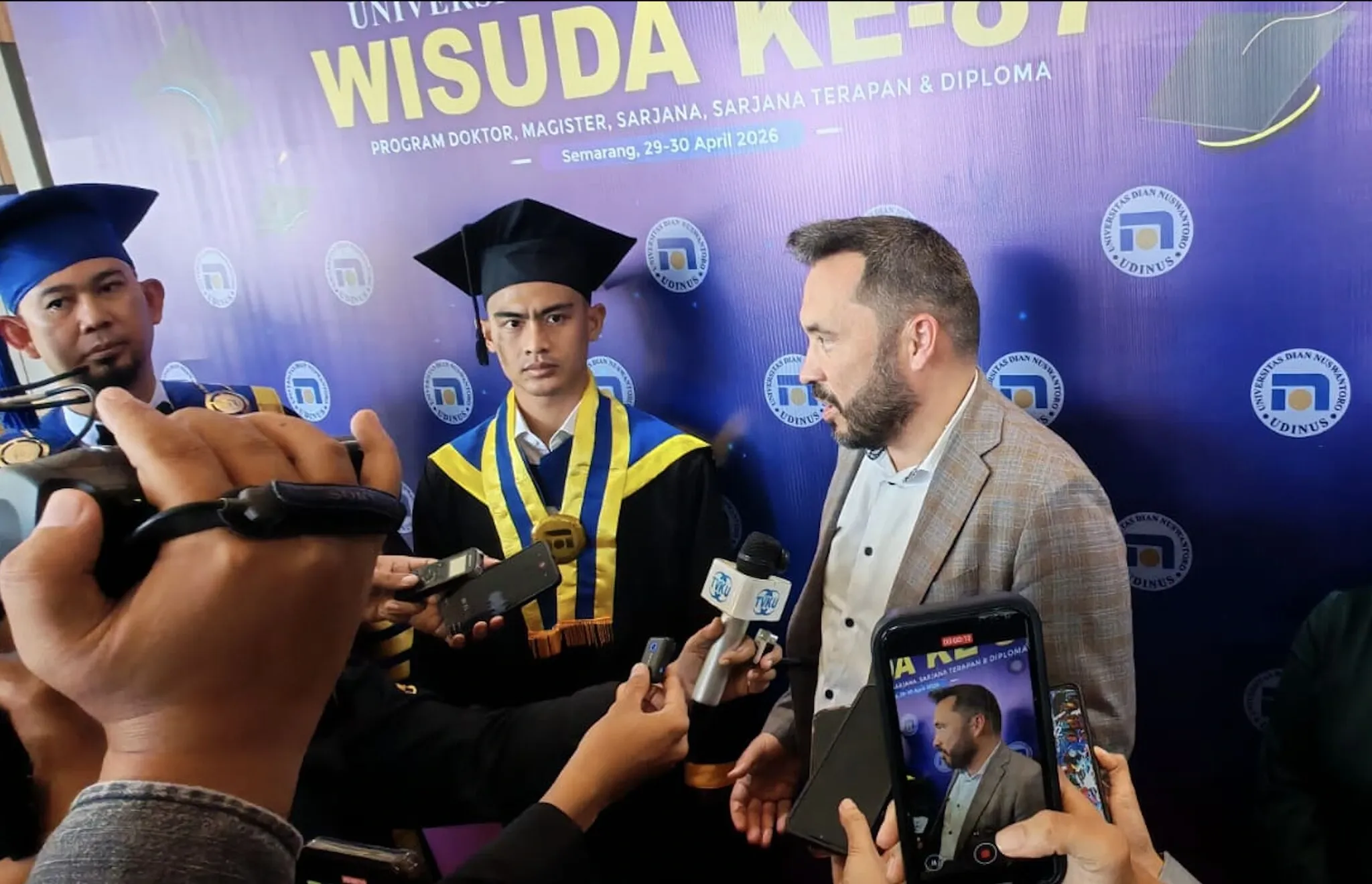
Udinus's rector, Prof. Dr. Pulung Nurtantio Andono, S.T., M.Kom., put it plainly on the day: "This is the first time in Udinus history that we have combined blockchain technology with diplomas and transcripts. With this system, document authenticity can be verified easily — and the record cannot be deleted."
For institutions evaluating whether to make this move, the Udinus rollout offers a useful data point: 841 credentials issued, two ceremony days, Rama Shinta Ballroom at the Patra Hotel Semarang, zero manual verification incidents. The process didn't require new infrastructure on the university's side, and it didn't change how the ceremony looked or felt — the robes, the handshake, the applause were exactly what they always are. What changed was what happens after — when that diploma needs to prove itself somewhere the university has no presence and no phone number anyone abroad would recognize.
If there's a lesson here for other institutions, it's that the strongest case for blockchain diploma verification isn't a "modernization" pitch — it's the much narrower, much more concrete question of what happens to a graduate's credential the first time it leaves the country.
About Sealbound
Sealbound is a digital credential verification platform built by Top Netics, enabling universities, corporations, and governments to issue tamper-proof, blockchain-verified credentials under their own brand. Its work with Udinus was supported through a partnership with Dubai Blockchain Center. Learn more at sealbound.com.
Considering blockchain credentials for your institution?
Top Netics works with universities, corporations, and government bodies to deploy Sealbound — from scoping the integration to issuing the first credential. If you're evaluating whether blockchain-verified diplomas make sense for your institution, we're the right first conversation.