The Version of This Story That Was Wrong
By 2023, plenty of smart people had written real-world asset tokenization off. Nice idea, wrong decade, they said. Another blockchain promise that would never ship.
They were early to call it, and wrong. Tokenization spent the next two years moving somewhere unexpected: out of conference halls and into regulatory rulebooks, government land registries, and consulate briefing rooms. Today RWA tokenization regulation is real and enforceable. In Dubai it now decides which products ever reach institutional capital. Most founders are still building as if the rules can wait. They can't.
Why a Consulate Session Signals More Than a Conference Panel
Conferences talk to people already sold on the idea. Consulates talk to everyone else. That's why one session is worth your attention.
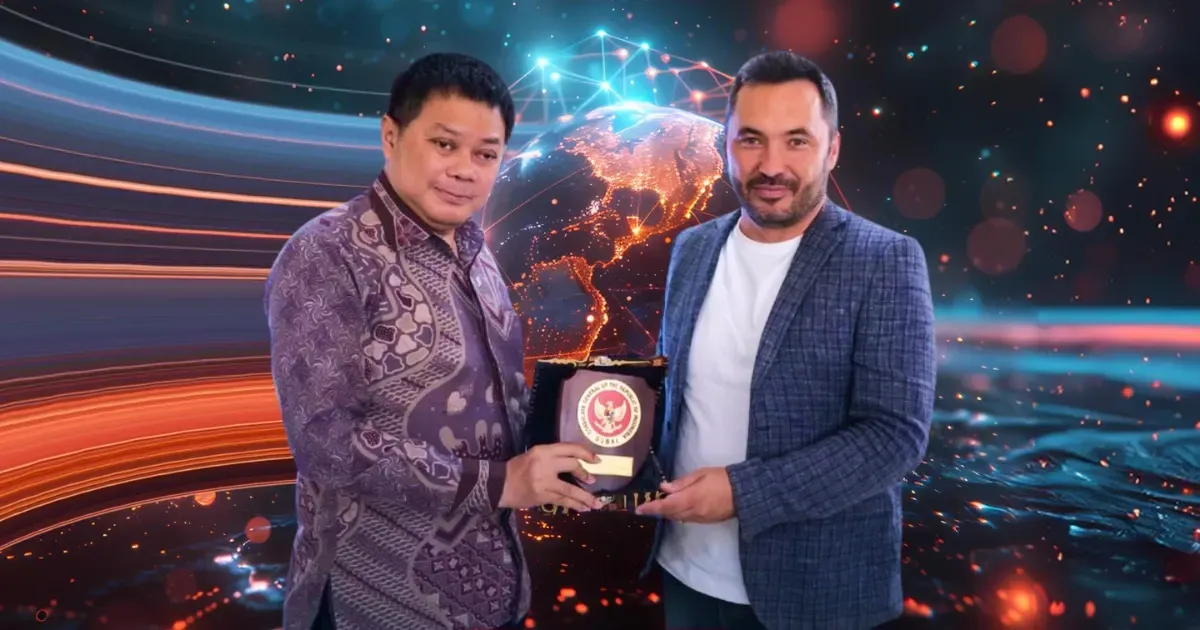
In spring 2026, Consul General Denny Lesmana ran an awareness session on real-world asset tokenization at the Consulate General of Indonesia in Dubai. This was a formal briefing inside a diplomatic mission, for its own staff and for Indonesian students building careers in the UAE. Ihor Arkhypenko, Co-Founder and CEO of Top Netics and Chief Innovation Officer at the Dubai Blockchain Center, was there to explain it. The room wanted to understand what the technology does, not trade it.
The signal is in who convened it. A consulate schedules a session like this when it expects the subject to reach its people's desks — a judgment about operational relevance. That carries more weight than applause at a keynote. When the people responsible for citizens and capital abroad decide they need to understand tokenization, the technology has crossed from speculation into something institutions plan around. RWA tokenization regulation in Dubai has become a policy conversation.
What the UAE's RWA Regulatory Framework Actually Means in 2026
If you've heard "VARA" but never got a straight answer on what it means for your product, start here. RWA tokenization regulation in the UAE is deliberate, built around VARA's Asset-Referenced Virtual Assets (ARVA) classification. Dubai's rules already work, and for a founder that clarity is the point: you can design a compliant product on purpose instead of guessing where the line sits.
The timeline is short. In May 2025, VARA introduced the ARVA category in its updated Virtual Asset Issuance Rulebook, effective 19 June 2025. The federal layer moved next. On 1 January 2026, the Securities and Commodities Authority became the Capital Markets Authority, and the CMA issued Decision No. 4/R.M/2026, defining eight licensed virtual-asset activities in a federal framework that runs alongside the existing regimes rather than replacing them.
So the map is layered. VARA governs Dubai-based entities. The CMA covers the UAE nationally. The financial free zones, ADGM and the DIFC, keep their own rules outside the CMA. It looks complicated on paper, but that coordination is exactly what founders underestimate: each regulator has a defined lane, so once you know which one your product sits in, the requirements are knowable in advance. That predictability is the moat other jurisdictions can't copy quickly.
What VARA's ARVA Classification Means in Practice
Classification is the first decision, and it shapes everything after it. An ARVA is any token that stands in for ownership of or income from a real-world asset, directly or indirectly: a building, a commodity, a fund stake, a revenue stream. If that describes your token, it's an ARVA, and ARVAs fall into Category 1.
Category 1 brings real weight: a license, a published whitepaper and risk disclosure before any offering, reserve audits and an annual financial audit while the token circulates, and disclosure duties that continue for the life of the asset. Structuring won't get you around it. VARA reads economic substance, so what your token does determines what it is.
What the DLD's February 2026 Activation Means for Real Estate Tokenization
On 20 February 2026, the Dubai Land Department switched on Phase 2 of its Real Estate Tokenization Project. Around 7.8 million property tokens became tradable on a live secondary market, each one tied to a DLD-registered title deed and priced in dirhams.
This is regulated resale, built with VARA, the Dubai Future Foundation, and the Central Bank of the UAE. For anyone building on-chain real estate, it closes the gap that held back Phase 1: tokenized real estate UAE interests can now be sold, not just held. The infrastructure serious tokenization depends on is in place.
Why Tokenizing an Asset and Making It Trustworthy Are Different Engineering Problems
Most coverage of blockchain real estate regulation skips the hard part. Putting an asset on-chain and making that asset trustworthy are two separate engineering problems, and solving the first says nothing about the second.
Here's how the gap opens. A property goes into an offshore SPV, gets tokenized, and sells to retail buyers. Yields arrive monthly, at the property manager's discretion. The deed lives on-chain. The income math stays off it. The manager tallies the rent, deducts fees and reserves that were never disclosed, and sends whatever remains to a smart contract that pays out. None of it can be verified. The manager can reshape the fee structure, delay a distribution, or reclassify an expense until the yield quietly shrinks, and the token holder has no way to see it happen.
So the holder owns a verifiable claim to the asset and an unverifiable claim to its income. That's the trust problem at the heart of tokenized real estate. It has to be solved before institutional money arrives in size, and before retail buyers get real protection.
Fiddera, being built by Top Netics, addresses that gap directly. It's a non-custodial yield assurance layer for tokenized real estate RWA: rule-based reserves, on-chain monitoring, automated payout controls. The yield assurance tokenized assets receive through Fiddera is enforced by the protocol and verifiable on-chain, rather than promised in a prospectus no one can audit. That's what separates tokenization as a pitch from tokenization as infrastructure. The trust lives in the code.
What Founders Building in This Space Should Do Now
Dubai's RWA tokenization regulation is unusually clear, but the early-mover window won't stay open. If you're weighing whether to build an RWA tokenization platform here, four moves matter most.
Start with classification, then choose the tech. Before you settle on a chain, a custody setup, or a token standard, get a legal read on whether your token is an ARVA. It probably is, and that answer sets your license path, capital, and disclosure load. Design around it from day one, or rebuild later at several times the cost.
Talk to VARA early. The regulator favors founders who engage before they're forced to, and early contact gives you guidance that never reaches the rulebooks.
Solve the yield problem before you launch. The market is full of tokenized properties with opaque income mechanics, and institutional buyers have started separating verifiable yield from the rest. Build assurance in from the start, or watch that capital go to someone who did.
Use Dubai's infrastructure, not just its name. Its Phase 2 market, ARVA framework, and the Dubai Blockchain Center are working tools, and founders who plug in directly hit fewer surprises at launch. The constraint that decides whether you reach institutional capital is, in Dubai, defined.
Top Netics portfolio includes Sealbound's blockchain credentialing platform, which issued Indonesia's first blockchain-verified university diplomas — a different application of the same on-chain verification infrastructure.
Building an RWA Tokenization Venture in the UAE?
We've been building in this regulatory environment since before VARA's ARVA framework existed. MetaDeed and Fiddera are part of our portfolio. If you're navigating the same space, we should talk.
